Posts mit dem Label review werden angezeigt. Alle Posts anzeigen

Samstag, 16. Dezember 2017

Jane, oh Jane

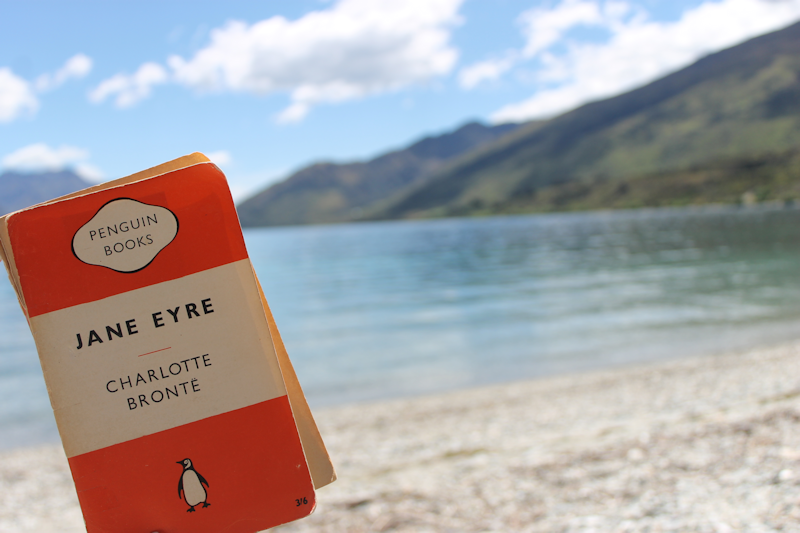
I think it's save to say that I'm really into classics now. Over the course of this year, I've made sure to check out some books that I had been hearing people (ok mostly characters in tv shows/movies but well) reference for ages. That resulted in me finally getting all the swooning over Mr Darcy from Pride & Prejudice and reading my very first utopia (I'll definitely post about all my thoughts on Brave New World soon since I had A LOT).  Enjoying the classics and picking them up that regularly is something that I'm very happy about. But, don't be fooled: this has not always be the case for me. There was a time before and it basically all changed with me finishing Jane Eyre by Charlotte Bronte.


Well, ok. This is probably an exaggeration. I've always chosen classic pieces of literature because I'm into the challenge. Though, it never felt as easy and as good as right now. And that came about with me enjoying the masterpiece that is Jane Eyre that effing much.

The novel follows the life of young Jane who lives with her despicable aunt and her awful children. Life's not treating Jane well and right from the start you feel for her. Even and especially as a child she comes across as headstrong, brave to say her mind and always shows passion for what she stands for. That doesn't change throughout the book and is probably why I like Jane as a character so much.

The reader follows Jane's journey to a boarding school where she faces harsh conditions again only to see it graduately growing better until she becomes a teacher at said school herself. It is an interesting part of her life for its own but to be honest, compared to the rest of the book, the first 50 pages felt slow to me. These are probably meant more for a built up then actual story. On the other hand, you could proably fill a whole novel just with Jane's childhood misfortunes and make it a tragedy par excellence. What I'm saying is this: it's not the main focus of the novel.


Her young adulthood is the part where it gets more exciting. And some more interesting characters come into the mix. Jane takes chances and leaves her school to pursue a career as a gouverness. She finds a job at Mister Rochester's estate, Thornfield Hall, where Jane teaches the young Adele, a protegé of said Mister Rochester. I love that Jane challenges herself to take this job although she had a stable (but boring) position and had no need to change her life. But she does because that's her spirit. Ahhh, Jane.

I think what I wanted to talk about was the other characters. So, there is Jane's new boss who she does not really like at the beginning. But oh well, he ends up being kind of her thing after all. Me personally really enjoyed their love story. It never took over but was an enrichment to the story. We see Jane as a lover, as a grown woman making decisions for the rest of her life, trying to keep her honour and dignitiy. She has some difficult choices to make and she never falls out of character, even when the times are tough and as a reader you might wish for her to not be as morally responsible as she forces herself to be. What Jane realizes throughout the book is that happiness in the long run may not be identical to happiness today. So in order to live a content life, she must sacrifice some of her sources of happiness to stay true to herself and be happy in the end.

Whether she ends up alone or not, I am not going to give away. Only that along the way, there will be twists and turns but always people on the way that may shape your life. Oh my, this got wild soo soon. Interestingly though, Jane Eyre felt so much more realistic and not as dramatic as Wuthering Heights, her sister's well beloved only novel. As many have written before me, Jane Eyre is much more light hearted, although compared to Jane Austen or her kind it is still pretty packed with dark tales and a lot of emotional trauma for the characters. Jane is my bae and I will always have a special place in my heart for her. And that's what makes a book a masterpiece for me.

Donnerstag, 6. August 2015

"If all else perished, and he remained, I should still continue to be; and if all else remained, and he were annihilated..."

...the universe would turn to a mighty stranger: I should not seem a part of it."


If I wanted to write an honest and true to the reading experience review of Emily Brontë's Wuthering Heights I should probably start writing, stop halfway through it and abandon this post for several weeks only to start from scratch. Not being able to get through a book at first attempt is something I struggle with from time to time and there are several reasons for it. One being there's another book waiting on my shelf that for some reason is super high on my priority list due to either public debate about it or an upcoming movie adaption (or both considering a movie often brings a lot of publicity to the book). Another obsticle with getting through a book: if I don't enjoy the writing style or just simply find it boring. Simple as that. Sometimes badly written books can still work for me (e.g. The Vampire Diaries), but then I mostly enjoy the trashy aspect of reading them or just relax with a thinly constructed story. Putting them down if I don't enjoy them anymore or not continue the series are no problem for me. That's not the case with classics though.

And that's me diving into the thrid group of books that I struggle to finish in the first go: classics. It's mystery to me, since 'classics' aint even a homogenous genre, people tend to define classics mostly by how books accomplished to be relevant and read all over the world decades and even centuries after they've been published. There are rather fast-paste novels in the mix and there are slow, dragging reads in there, I don't doubt. Still, my head does this thing where it kind of recognizes that the books I'm trying to read is a classic and shuts down after 50 pages or less. I do not know whether it's the fear of not being able to finish the book and being a failure or rather the fact that classics tend to be written a little differently from modern literature (e.g. older language, less dialog, ...) which results into me being significantly slower at reading it. Here I need a reminder from time to time: speed is not the defining measurement for your reading experience. You enjoy a book's content so intensely you need to finish it in 2 days? Excellent! You do take your time reading and this enables you to understand and relish the book to the best possible extent? Excellent! There shouldn't be a time bomb attached to every book, especially not when it comes to stuff written more than a centrury ago.


That being said, I can proudly remark that I have given Wuthering Heights another go after putting it down. I wanted to grasp the significance of the book so badly. So, what do I think of it?

First: this ain't a proper summary but at least some words about the content: the novel is set in a rural part of Yorkshire and basically covers the lifes of about three generations of two familys living in two huge but kind of spooky properties. The basic conflicts of doomed love that cannot be, rivality between brothers and the unability to let go of the past and how people wronged you seem to reappear through the generations, sometimes with slightly switched roles or outcomes.

This is - contra to popular believe and what I've read about it beforehand - not a lovestory. As I said, it features characters that claim they're madly in love with each other but as a sophisticated reader you know that what they call love is rather an obsessiv form of possesivness. Seldom I have seen characters that are that self-centered and turn their love for someone into hate and wroth the minute it's not returned or can't be returned. But don't get me wrong: this is no criticism! What Emily Brontë really masters at is portraying flawed, deeply troubled human beings that still seem to hold on to values like family, pride and honour. In the end, the novel really shows what terryfing things people are able to do to each other even lacking the use of physical violence. Emily Brontë adds another dimension to this subject matter when she displays it reoccuringly in the generations to follow, raising the question of how much character traits are set in stone by either nature or nurture. This aspect of the story is definitely my personal highlight of the whole book and got my mind occupied even after finishing the novel itself.


Another thing Emily Brontë interestinly played with in this novel is the narration. I went into the book expecting a female first person narrator pretty much like in her sister's work Jane Eyre (which I haven't read). Dang, was I wrong. The story is narrated in a first person's narration, but only for brief parts of it. The majority of the story is brought to you by tellings from a housekeeper or even tellings within this telling (I need to stop using the word 'tellings' right now). This made getting back into the story after I put the book down for a week or so very difficult and definitely contributed to me not being able to finish it at my initial attempt.

So, am I generally fond of this book? Hm, I'm not sure. As I said the narration and the questions about human nature are definitely reasons to consume Emily Brontë's only work rather today than tomorrow. But there are some cons as well.

Firstly, I didn't think the book met my high expectations at all. I expected to be blown away both by language and plot. Both are relatively simple or at least not really outstanding to me. Parts of the story feel like a constant repeat of the same things: a and b are kin, a hates c, but b loves c. The conflict slowly unfolds and everyone gets hurt. The ending kind of makes up for all the pain through out but this definitely ain't no happy story. What actually happens during the 400 pages is not that much and not that important, it's focused on the character and family dynamics, I get it. Still, I would have liked some more outstanding plot devices, something to destinguish this novel from another period drama piece.

Another aspect I had problems with were the characters: they are (almost? can't think of one right now who wasn't) all dislikable, even the narrating housekeeper doesn't cover herself in glory. Of course, flawed characters are needed to emphasize the problems of human conscience and morals that I stated early as something I really enjoyed about the book. On the other hand, this holds me back from identifing myself in any way with the protagonists and therefore I don't feel their pain or their longing as much as if I was emotionally invested in them. Emily Brontë probably consciously sacrificed the one for the other (or not, I mean, who am I to know something about Emily Brontë's writing process). Okay, let's just say not every book serves as something I can get emotionally invested in. But what remains is that the undergoing meanings of the book and the questions being raised have a higher probability of staying in your head and being relevant to you, if you feel emotionally arroused due to the content of the book. Trust me, I do study that kind of shit.

So where does this leave us? No likeable characters, lacking plot points and the fact that I couldn't finish it in the first go. Plus my dissapointment, because to be honest: I thought I'd love it. Still: I don't regret reading the book at all and I still would recommend it. Not as a fun read probably but as a challenging, intelectual stimulating but flawed novel. It didn't blow me away and I wouldn't consider it a masterpiece. I think it's a decent novel with an interesting narration and important general themes.


What this book leaves me with is this: I can do it. I can finish books even after I put them down the first time. I can finish a classic. Even if I don't like it 100%. I can read books from more than a century back. I can do it. And I will do it. Most fulfilling was watching a lot of book reviews of some booktubers I enjoy on Youtube - because that's the thing about classics: a lot of people have read them and will continue to read them. This book will probably stay relevant until the time I have children (or at least I'm old and grey) and this is such an interesting thought. I am very proud of myself that I now can state my valid opinion about this classic. I'd like to continue with some of Jane Austen's work (which I also heard is easier to read then Wutherhing Heights and more cheerful) and of course, some of Emily's sisters' work like above mentioned Jane Eyre. There is also the BBC miniseries of Wuthering Heights left. Fun times ahead.

A couple of words about my edition: I love this one so much it hurts. I bought this one at a little street book stand in Amsterdam and it featured a lot of dutch annotations like the 'stamboom' (family tree) you can see on one of the pictures. It's amazing realizing that you're not the first one to read this and even more when you can add some scribbles yourself: who knows who's going to read them next. I also managed to damage the already not in the best condition book pretty heavily: I drowned it once in water and once in shower gel - but it survived and now looks like it's ancient. Handle your books with care, they say, but I say: a damaged book is a loved book.

Samstag, 1. Februar 2014

I get a little sentimental over you

The quotation that is serving me as a title for this review is the most accurate way to describe the novel Filth by Irvine Welsh by not describing anything at all that is even remotly related to anything happening in the book. Sounds like mystery to you? Let's help you out with the song the qutoe/chapter name/blog title is based on. While listening to it imagine a person that you'd totally see liking this song and relating to it. Now take the complete opposite to this person and you'll have the protagonist of this masterpiece of a novel: Bruce Robertson who can be described best by the insult that gives the book its name: FILTH
So if you haven't heard of the book before you know now that Bruce doesn't enjoy cheesy love songs. Well, let me tell you: this is definitely one of his lighter crimes.


On the back of the book you get warned about various topics in the book including drugs, perversion, sexism and racism. Still nothing will prepare you for what you'll experience by following every step of Bruce Robertson's miserable existence during the certain december/january the book takes place. And for me at least, these almost 400 pages of a novel were probably one of the finest piece of literature I've EVER read.


So what's the deal with this book? It basically presents complete insight into the mind of Bruce Robertson who works for the Edinburgh police (or let's put it in the right Irvine-Welsh-tone: polis) and who would not only do anything for a promotion (including: scheming, spreading rumours about co-worker's sexuality and intimidating fellow contestants) but also seems to thrieve on being the most sexist, racist, self-involved bastard Edinburgh and/or entire Scottland has ever seen. In his spare time, he's either telling himself that it's only a matter of time for his apparently absent wife to come around begging him to take her back or feeling superior to every other human being that gets in his way. So while his primary mission in the book is to investigate in a murder's case, you'll find him using every opportunity to either get carried away by using drugs, sleeping around with a various amount of woman/hookers or taking adventage of him being in law enforcement (convincing an under-aged girl to give him a blow job for not getting arrested is only example).

That description might evoke the question how such a person could by any chance be someone you would actually like to read about. Well, let me tell you, that you not only are going to like seeing the world through his eyes, it's also probable that you'll root for him to get the promotion, all the girls and away with all his crimes. The narrative form of the book that mirrors all of Bruce's thoughts and reasoning just demands you to take his assumptions and values for given and for the time reading about him identifying with him in some way. This is what makes this journey so unique but also lets room for questions: how can you as a decent human being find it so easy to dive into the mind of such a sociopath? Why might you even try to find excuses for what he does (e.g. his past, him missing his wife + kid, ...)? Why do you feel bad for him when in the second half of the book things begin to go down for him?


I cannot answer these questions for you (although I do have some theories) but that might not be the point of it anyway. You know how you walk through life getting to know strange people that act in unacceptable ways? Reading this book reminded me so much of how we don't get to take a trip into the minds of other people in real life, so we can never know what it's really like to be another person with different memories and different goals in life. And just like Bruce's colleagues and other acquaintances are unlikely to see him for the person he truely is we also might live next door to someone just like him, we're just not aware of it.

What the book is also great on is creating atmosphere. The story takes place in Edinburgh most of the time which is very richly presented by the Scottish and slangish expressions in which Bruce and a lot of other characters talk and think. We're also in for a little throwback to the 1990s where Phil Collin's albums are something to discuss during lunch break and "remember when I fucked that cunt the day of Princess Diana's funreal?" are somewhat current walks down memory lane.

Although I've spent most of this review discussing more content related issues what also stands out in this book are the ways Irivine Welsh tells the story with both having parts told by what might or might not be Bruce's wife (so the unreliableness of this narratorship becomes apparent very early on in the story) and by another creature that seems to have full insight on his backstory (not going to spoil the source right here for you guys). The latter is constantly overlapping Bruce's own storytelling which becomes vivid when parts of the text are literally overlapping the original text (just look at the picture, how awesome is this?!). This device is even more used toward the end of the book when Bruce's mental condition gets more and more problematic.


I feel like I am giving away lots of details about how the story evolves which could spoil your own non-biased perception and interpretation of the book. On the other hand, I can hardly say that I started reading the book unbiased myself. I happened to pick up the book right after watching the movie adaption directed by John S. Baird and starring James McAvoy (!) in the lead role. The movie introduced me to the story and left a gigantic impression on me: the psychological developement of Bruce seemed to be so bravely portrayed and well executed. And although I still love the movie and have to get my hands on a copy of the dvd which will be released this month actually (yay!) I cannot strech enough how even more shocked, amazed, speechless and involved in the character Bruce Robertson  I was while and after reading the novel. Irvine Welsh does such an amazing job at making you feel something. Don't get me wrong: most of the time it is disgust, anger, shock, bewilderment and these kinds of things. But it is also despair, pitty, sometimes even relieve that you weren't exposed to all the bitter things that happened in Bruce's life. There is a love story hidden under all those layers, too and you clearly see his need for compassion and sympathy although he carefully covers this with his infuriating attempts at making other people's life miserable.


So long story short: psychologically rich character insight, quite unique storytelling devices and the mixture of Scottish/British pop culture references & the dirty/slangish/Scottish language made reading this novel the most oustanding experience I ever had reading a book. Though I am not really the kind of person to claim one true favorit book of all time, if I had to chose it'd probably be my pick.

My current life goals now do include: reading Trainspotting (Welsh's most famous novel which I already got myself) + other Irvine Welsh books, moving to Scotland/Edinburgh at some point in my life and hoping that my high hopes for upcoming James McAvoy roles won't be disappointed after seeing how AMAZING he did as Bruce who happens to be one of the most consequently and thoughtfully built characters I've ever come across.

enjoy reading & love hemmingway!